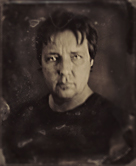
St Louis was where I grew up. Playing sports, racing dirt bikes & fishing were my world. I was 15 when a member of the rock band I played in asked me if I could shoot pictures for his dad. He knew I had a camera and messed around with photography. His dad was a local concert promoter and his company, Contemporary Productions arranged concerts throughout the midwest. I took the job and from then on every concert that came to town I was given a front row seat and a backstage pass so that I could photograph the event. Bands such as Led Zeppelin, Jethro Tull, Dylan and a hundred others were my first jobs in photography. I was playing hockey at the time with hopes of making it a career, but that was not to be. My knees had been a big problem, multiple surgeries at a young age and I had to give it up.
I got a full time job working in a cement factory to save needed money for college. It was hard labor, brutal, illegal and hazardous, but it payed well. I was also still shooting concert photos at night when I could. I obtained my Pilots license at this time, something I always wanted to do and I just turned 19. A year Later, I got my Helicopters License. My plan was to become a commercial pilot until I found out the cost of that schooling. My dad was out of a job and there was no way I could afford it alone. I decided on Brooks Institute of Photography, It was the premier global destination for a professional photography education, renowned for its technical rigor and industry-standard facilities of the time.
While going to college I worked many different jobs. I drove a lunch truck, a Linen laundry delivery truck, worked at Hertz Rent A Car, a color processing lab and the local YMCA on weekends. It was a tough time.
One day after shooting a school fashion assignment, I realized that being around beautiful women all of the time wasn't too shabby. It beat taking pictures of food, products on a table or sports. I decided right then that after school I would move to New York City the capitol of fashion in the US. Europe was down the road but I didn't know that at the time. I graduated and New York City was next on the list.
Never having been there, I took a bus from California to NYC's Grand Central Station with nothing but a Degree and a student loan payment hanging over my head. Not knowing a soul in NY or even which direction was north, I walked to the 57th St. YMCA and for $16.50 a day rented a room with a bed and chair. It was so small you had to step over the chair to get to the door. Bathrooms were down the hall. Later, I moved to a dump in the west village, that was what I called home the first year in NYC.
Life sucked.
I was hired as a freelance assistant by the day or week by Photographers. Many well known,Irving Penn, Horst P. Horst, Scavullo, Patrick Demarchelier, Peter Lindbergh, Avedon, Watson and Meisel for my technical expertise. As a #1 Technical Assistant you usually have more to do with the final image than that of the photographer. Depending on who you worked for and I worked for many, you learned that few of them had little, if any, technical knowledge.They depended heavily on assistance doing everything from lighting to printing. Social Connections is what got them work, Social Connections meant everything. Others like Penn, Knew the craft inside and out makeing him a joy to work with. Times have changed but this business is still all about social connections for getting assignments.
I opened my first studio in NYC and started shooting fashion, album covers and advertising assignments. These took me around the world and I eventually ended up living in Paris, Milan & London for a few years. I was working like crazy. Always the experimenter, I used every type of camera, lighting equipment, film, digital equipment that I could get my hands on. I worked in all camera formats from the tiny Minox spy camera to the Giant 20"x 24" Polaroid. I also handmade and used a Mammoth, 20" x 24" Wet Plate camera. Unconventional to say the least especially when many successful photographers do the same shot & technique over and over for their entire careers.
I moved back to California in the early 90's and set up a studio, I was tired of living in the confinements of NYC. The industry was changing fast and not for the good for the freelance photographer with stock and digital photography moving in. Digital made it easy for anyone with resources to work as a photographer and Stock houses were making it easy for art directors to find images for use and killing the production of new assignments.
Tough times were ahead.
Much of my time now, has been spent doing fine art photography using several of the painstaking processes from the 1800's. Many of the images that I have made over my lifetime with new current works are being prepaired.